02 Mustang V6 Suspension Build

Pony02

New Member
Joined
Sep 18, 2026
Messages
8
Reaction score
0
Location
SC
Hi! I'm new here. I've followed WarHorseRacing on Youtube and lurked some on here since I bought my Mustang and would like his and/or other's advise on building a balanced suspension for my street ride.

The Situation

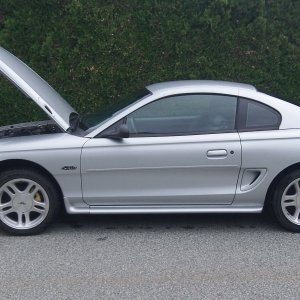
I bought my 2002 Mustang V6 5 spd with 245K miles on it a while back with the goal in mind to just have a nice resto-mod project and final product. I'm older now and don't care about being the fastest (longitudinally or laterally), best looking or sounding.

Even if I did care, I'm on an extreme budget with this and can't afford to anyway. I also don't have the luxury of a concrete driveway, so I will be working with jack stands sitting on plywood, what sits on dirt/grass.

I want a nice Mustang that is reasonably sporty. I may not even ever upgrade the wheels. Part of the selling point of this car for me was it has the good looking factory mags on it that I don't desperately want to change.

I have another vehicle I'm using as primary transportation right now, but would absolutely love to get this Mustang to primary driver status!

The car looks to have a rebuilt front end suspension, so that means new rubber bushings and ball joints I don't have to worry about, and the steering is just fine.

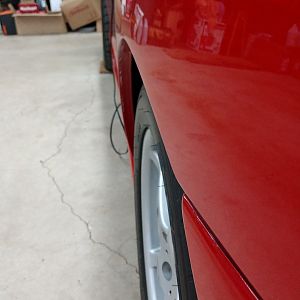
The springs have a typical sag of these 24 yr old cars and probably the equivalent of I'd say, 1" lowering springs. I cant be accurate on that. The camber of the front wheels is noticeable, with the lower portion of the front wheels sticking out more than the upper. It's actually sitting exactly where I'd like for it to sit for a nice sporty look if I were to keep these wheels (not too low).

The absolute number one issue that has to be addressed first is the rear end being too loose. Turning a corner feels like the car is going to slide right off of the rear axle or something. It's a bit unsettling. I'm probably making it sound worse than it is, and I'm sure you guys know what I'm talking about. I don't think it actually slides that much but it isn't a solid brick, either. That coupled with the weakened springs and bump steer from being "naturally lowered", has all got to be rectified.

So on top of addressing these issues, I want to tighten up the cornering ability a bit over stock without compromising the NVH too much. I enjoy the ride as it is now and probably would much more if it were new. I know I'll have to compromise some, though. Just not too much. I should probably also mention that I've owned and driven other Mustangs, one of them being a stock 90 GT, and I pretty much hated that ride. Due to my experiences with that one, I am also VERY aware of the snap oversteer issue, what causes it, and would like to reduce chances of that as much as possible.

Here is the parts list as planned so far.

Got:
Rebuilt front end minus springs
GT rear sway bar (24 mm)
Rear shock tower brace
Front strut tower brace

Going to get:
GT front sway bar with poly bushings (to match the rear)
New or used GT springs all around, cut to lower back down to desired reasonable height
New rubber spring isolators
New struts and shocks for GTs that are about 10% stiffer to match the cut GT springs
Caster/Camber alignment kit
Bump steer kit
Aftermarket lower control arms with multi-piece, greasable poly bushings


That basically sums it up.

What do you guys think? Is that a good balance? Wouldn't that tighten things up and get rid of some of the looseness of the rear end?

Now, the reason I didn't include the upper rear control arms is something I wanted to consult you guys about. I understand these will be important in rectifying the rear sway, but how important? I've seen guys say the LCA replacements really tighten up their rear ends to the point they didn't need anything else.

I also don't want a huge increase in NVH and changing these arms and their bushings would also mean going way up under the car where I might not be so comfortable under the current situation or paying someone extra to do it.

I need your guy's input on the NVH levels and if this is necessary. I'm willing to compromise some, just not A LOT.

If I were to do it I understand switching to poly on the frame end but staying with stock rubber on the rear end housing mounts is the way to go. Should I put in new rubber on that end? Would the old bushings being so old make it more pliable so it can articulate more or would they make it more unpredictable? I mean, it is a good thing or a bad thing?

Let me know what you guys think.
 
Last edited:

Warhorse Racing

Active Member
Joined
Apr 3, 2019
Messages
327
Reaction score
330
I’ve been able to help a number of people make their 79-04 Mustangs handle well on a budget. It’s great that you’re thinking about a balanced setup. But, based on your goals and your list, I would consider making some different choices to get a better-balanced setup. If you’re willing to share your budget, I’d be happy to recommend which parts I would prioritize.

Different people have different tolerances for NVH, so it’s hard for me to say that you’ll be okay with how much NVH these mods add. Bushings are the “secret sauce” for making these Mustangs handle well on a budget. But upgraded bushings will add NVH.

You have to think of suspension as a system, not just front or rear. It all has to work together. From the factory, the rear suspension feels really “vague.” Many people focus on improving the rear suspension without upgrading the front suspension. You can’t get through a corner if you can’t get into a corner.

Looking at your list, here are my thoughts and suggestions:

SPRINGS: I wouldn’t recommend using cut GT springs to achieve your desired ride height/quality. For a budget build, good springs are really important. If you’ve watched my YT videos, you know that I don’t like to lower SN95 Mustangs more than 1.25”, and my cars are only lowered about 1”. They don’t look super-cool, but they handle very well. I prefer Ford Performance C springs (linear front/progressive rear). For your application, you might prefer Ford Performance B springs (progressive front & rear). Going with rubber spring isolators might get the car a little lower than poly isolators and help with NVH.

I have never had to use a bump steer kit on any of my Fox or SN95 autocross Mustangs (they are all lowered 1” or less).

Lowering these cars too much on springs that are too stiff makes them handle much worse. It’s one of the biggest mistakes people make when modifying 79-04 Mustangs.

SHOCKS & STRUTS: For a budget build that blends handling and comfort, I think you’re better off going with a relatively inexpensive set of adjustable shocks & struts. If the shocks & struts you listed as being 10% stiffer for GTs are aftermarket non-adjustable performance shocks & struts, they are often similar in price to an entry-level set of adjustable shocks & struts. Compare the cost of Koni STR.T (non-adjustable) to KYB AGX and Steeda Pro-Action kits. The adjustable kits are about $50-$80 more. You’ll end up with much more control over ride quality and handling with adjustable shocks & struts.

SWAY BARS: Your V6 was born with a tendency to understeer. It came with a 1” front sway bar and no rear sway bar. A 2002 GT was also born with a tendency to understeer. It came with a 27mm front sway bar and a 23mm or 24mm rear sway bar. If you put OEM GT front & rear sway bars on your V6, you will still have a tendency to understeer at the limit of traction. To get the car closer to neutral handling, you would use the OEM V6 front bar with an OEM GT rear bar. If you go with an OEM GT front bar, you would get the car closer to neutral handling with a 25mm OEM or aftermarket rear sway bar.

Using C/C plates and adjustable shocks & struts would make it easier to compensate for the stiffer sway bars (especially the stiffer GT front bar).

REAR CONTROL ARMS: A good set of rear upper & lower control arms (combined with the right supporting mods) will help address the “vague” feeling in the rear of the car. I know there’s a lot of posts about aftermarket rear upper control arms with poly bushings being a bad mod that makes quadra-bind worse and kills the handling of these cars. I can tell you that I’ve done 600+ autocross runs with Steeda rear upper & lower control arms on 2 different cars and I never had a quadra-bind issue. If you decide that rear upper & lower control arms are a good option for your budget build, go with quality arms that feature a 3-piece poly bushing. I’m a big fan of Steeda arms; J&M makes a kit that costs less (I haven’t used the J&M arms, yet).

But, if what you’re looking for is a “reasonably sporty” car without a lot of NVH, you might not need aftermarket rear control arms. You might just want to go with OEM replacements for the rear control arms and the upper differential housing bushings. With a good set of aftermarket springs, a decent set of adjustable shocks & struts, the right sway bars, and the correct suspension adjustments (C/C, shock & strut settings), the car will handle much better than stock. If you’re not racing the car, you won’t really be getting all of the benefits aftermarket rear control arms provide.

It’s been a while since I’ve checked the prices of OEM-style replacement rear control arms. They used to cost about as much as some aftermarket kits with 3-piece poly bushings. That might influence your decision.

Some other stuff to consider...

A V6 Mustang has an open differential. That is a big contributor to oversteer when driving aggressively. The wrong throttle input at the wrong time can send the car sideways. Improving the suspension can only do so much if the driver makes the wrong throttle input.

I installed Steeda aluminum rear upper & lower control arms with 3-piece poly bushings on my 2.3L Mustang autocross project car. That car has had all of the sound deadening & carpet taken out, subframe connectors, jacking rails & a rear shock tower brace welded in, and lots of poly bushings installed. I’ve driven it on back roads, on the highway, and through the neighborhood a few times, and the NVH from the back of the car didn’t seem that bad to me. Full transparency, I’m probably not the best judge of acceptable NVH.

If you’re willing to go with a little more NVH to get the car even better, consider using a set of forward-offset poly or Delrin A-arm bushings in the OEM A-arms, and using spherical upper differential housing bushings along with the aftermarket rear control arms.

If you decide to make changes to your recipe, I’m happy to suggest specific brands for all of these parts.
 

shovel

Active Member
Joined
Jan 4, 2023
Messages
708
Reaction score
655
The springs have a typical sag of these 24 yr old cars and probably the equivalent of I'd say, 1" lowering springs. I cant be accurate on that. The camber of the front wheels is noticeable, with the lower portion of the front wheels sticking out more than the upper. It's actually sitting exactly where I'd like for it to sit for a nice sporty look if I were to keep these wheels (not too low).

If the springs truly are stock and just sagged you might want to invest in a set of Ford M-5300-B springs at some point - they are close to stock but slightly lower and progressive rate so they ride smoothly but increase to a higher rate on large bumps or when heavily loaded. You'll also want a shorter pinion snubber whether you get different springs or not, to avoid that annoying clunk.
The absolute number one issue that has to be addressed first is the rear end being too loose. Turning a corner feels like the car is going to slide right off of the rear axle or something. It's a bit unsettling. I'm probably making it sound worse than it is, and I'm sure you guys know what I'm talking about. I don't think it actually slides that much but it isn't a solid brick, either. That coupled with the weakened springs and bump steer from being "naturally lowered", has all got to be rectified.

Two independent things going on - one is deterioration from stock and the other is improvement (or, adjustment) from stock. I think people sometimes overcorrect on this, like if their car is sloppy from being worn out and what they want is a tight new stock feel they sometimes go wild on race stuff and wind up with not only NVH but also a sketchy unpleasant bucket because they're slapping parts on from a list instead of addressing actual faults on an individual basis. Just a good thing to keep in mind.
Here is the parts list as planned so far.

Got:
Rebuilt front end minus springs - good call, the ball joints don't necessarily give a lot of notice (that every driver picks up on) before failure. Really 100% of original front ball joints on sn95/new edge cars should be replaced at this point.
GT rear sway bar (24 mm) - good call, however this will result in unloading your inner wheel on cornering more frequently and with the open diff you've got that's a recipe for losing traction. Only real way to resolve that is swapping in a GT axle or installing a LSD in yours.
Rear shock tower brace - this doesn't really do anything.
Front strut tower brace - this is a good call.

Going to get:
GT front sway bar with poly bushings (to match the rear) - eh, not really important if you're not driving at the limit. A set of fresh rubber bushings on your present bar is going to be less cost and keep NVH minimal
New or used GT springs all around, cut to lower back down to desired reasonable height - not advised, use the money you save not doing other mods for a set of quality lowering springs like the previously mentioned Ford "B" springs.
New rubber spring isolators - yeah, not a bad idea.
New struts and shocks for GTs that are about 10% stiffer to match the cut GT springs - I haven't seen any reference to GT shocks being stiffer but if you want a tight OE-like ride that lasts a long time & just slightly higher damping rate than stock I'd go with the absolutely normal KYB Excel-G standard replacement shocks and struts. They are great, nobody needs more than that on a street Mustang.
Caster/Camber alignment kit - if the car hasn't been in a collision you probably don't need these for just a mild drop, you can use camber bolts to correct camber. That isn't only lower cost it also minimizes NVH because your stock strut mounts have rubber isolators and every caster/camber plate kit does not so that means a 100% metal-on-metal conduit from the top of your tire sidewall to the bottom of your seat cushion. Actual racing can take good advantage of maxing out caster, and major suspension drops require more than a camber bolt can fix.. but a street Mustang with a mild drop where NVH matters at all? nah.
Bump steer kit - don't need for a mild drop.
Aftermarket lower control arms with multi-piece, greasable poly bushings - this is that part where you could overshoot just fixing what's sloppy. I'd just do new OE upper and lowers with new axle bushings (note that these use a special tool to remove/install, it's not difficult with the tool but it sucks to buy a tool you only use once)

What do you guys think? Is that a good balance? Wouldn't that tighten things up and get rid of some of the looseness of the rear end?
My wife has daily'd her 02 V6 for about 12 years and in the last year or so the rear became pretty sloppy, on flashlight inspection it looks like the forward bushings on the lower arms are dry rotted real bad so I ordered a replacement set. Coincidentally installing those this weekend.

Now, the reason I didn't include the upper rear control arms is something I wanted to consult you guys about. I understand these will be important in rectifying the rear sway, but how important? I've seen guys say the LCA replacements really tighten up their rear ends to the point they didn't need anything else.

I also don't want a huge increase in NVH and changing these arms and their bushings would also mean going way up under the car where I might not be so comfortable under the current situation or paying someone extra to do it.

While you're under there it's about the same amount of work to inspect all of them. In terms of access if you have the stock single exhaust the lower arm on the driver side can be a pain to access because the muffler is in the way of the bolt. My wife's 02 has dual exhaust so I get to have fun on both sides.

If I were to do it I understand switching to poly on the frame end but staying with stock rubber on the rear end housing mounts is the way to go. Should I put in new rubber on that end? Would the old bushings being so old make it more pliable so it can articulate more or would they make it more unpredictable? I mean, it is a good thing or a bad thing?

Let me know what you guys think.

It's probably valuable to at least put it out there that under the very best of conditions a solid rear axle car built on a 1970s platform is going to feel sloppy compared with anything modern with four wheel multilink independent suspension and 50 years of manufacturing technology in how to glue a unibody together. Weld-in subframe connectors can go a long way toward making the car feel more modern without increasing NVH but it's still a Fox platform, for better or worse.
 
Last edited:
OP
OP
P

Pony02

New Member
Joined
Sep 18, 2026
Messages
8
Reaction score
0
Location
SC
Thank you for your quick responses! I really appreciate them.

I was really glad to get a response from you on a platform like this Warhorse because I have followed and studied your videos a lot and read some of what you've said on these forums. Due to your experience and success, I know you know what you are talking about. You are also great teacher. You seem to have the "explain it to them like they're 5 yr olds" skill down pat and that right there is what makes or breaks a good teacher.

I studied what you guys were saying and did some thinking about what I said, myself.

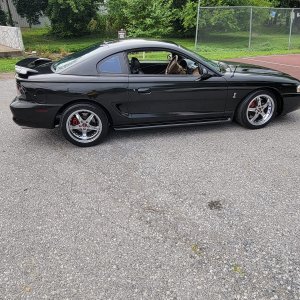
I brought up some images I took when I first bought the car, as I was going to show you how much lower it sat than new and the camber of the front wheel. Looking back at those pictures, it may not actually be sitting that much lower and the camber isn't as pronounced as I remembered. I also just recently watched a guy installing lowering springs on his New Edge and even up on jack stands, he had some camber to his wheel as well, which didn't seem to change at all when he lowered the car back onto its new lower stance. I don't know what's up with that but apparently it's a separate issue I'll get to when I get to it. It tracks fine and there's no uneven wear on the tires.

The bump steer could be the wonky rear end. It actually has only happened a few times in the few thousand miles I've driven it. That would be more consistent with a wonky rear end going over a bump at just the right angle vs the fixed geometry of a front suspension. I'll see what happens with that after I do everything else.

My purpose with the matching GT bars wasn't necessarily to balance the car more, but to stiffen turn in a little more (if that's a term). I want more steering response and I dislike too much body roll and sway. Its bushings will be poly.

I looked up b springs and they are basically what my 90 GT had. That's interesting and I'm considering those, as they would be more comfortable and civilized on the revised control arms and frame of the SN95, which I plan to reinforce further.

As far as lowering, like I said I really don't mind where it's sitting now. I don't want it too much lower on these stock wheels and tires, that would just make it look more worn out, in my opinion. I want a good healthy "pony car" look where it looks nimble and ready to kick around in the field, not low like a snake in the grass ready to strike at something. I do love the look of this car when lowered on the right wheels, but right now that's just not a goal with this car.

If the height is a little lower than new when it was stock and since this is a V6 car, who is to say the b springs will even lower it? That's something I'll have to consider on my own I guess.

Honestly, I don't plan on pushing the car too harshly like I did the 90 GT. It's just that when I did, those rear wheels broke loose when they absolutely should not have, at least for the unaware.

I do enjoy a good g pull. There's an entrance ramp to the interstate I like pushing a little. I have a 2010 Corolla on which I installed a rear sway bar and front strut tower brace (the two things I was advised to do to tighten it up, which worked amazingly), and I used to enjoy what pull that little car gave me. I knew I wasn't taking it to its limits (hopefully) and I didn't want to, I just liked the solidity of the car and the nice pull.

I remember being horrified at the thought of doing that in my old Mustang, and certainly wouldn't attempt it in the current one. There are also a couple of low speed turns I make every time I drive that I enjoyed in the Corolla and would be very enjoyable for me in the Mustang.

It's little things like that I want to enjoy without getting into danger or trouble.

In wanting to tighten up the car, I've been afraid of too much NVH. But I think I am going to bite the bullet and just install some solid, quality aftermarket rear control arms with multi-piece poly bushings, and I'll have to think on whether I want spherical or new rubber bushings in the differential housing.

If you say you haven't had any more trouble with quadra bind while auto crossing (and you haven't installed spherical bushings, either), and torque boxes are still intact, surely I can be a little less afraid of mine in my own situation.

That brings up a couple questions for you Warhorse. Did you use the stock rubber bushings or poly bushings in your differential? I think Steeda includes poly bushings to press into it. I know, I'll have to use a tool for removal. Also, have you ever had squeaking issues? I was going to go with greasable bushings as this will be a street car. I don't want squeaks and to have to get back under the car for something if I don't have to.

You are right, shovel. The rear shock tower brace didn't do much for my worn out street car, not as much as the rear sway bar, anyway, which still only did a little bit. Honestly I never expected them to, I just wanted to do a little something at the time that would be super easy to install, and they contribute to a foundation I was building.

I've never installed the front tower brace, but I'm going to do that and get some bolt on subframe connectors. I know those aren't ideal, but I can and will get them welded in later. I might even get a welder and do that myself, as I've always wanted to get into the hobby side of welding.

I'm aware there are other points of bracing and will consider those down the road. At the same time, I'm going to install all the rear control arms and bushings, and since you mentioned the exhaust being in the way, that might be a good opportunity to try a bolt in kit, myself. I really like the mild sounding Magnaflow system you installed on yours, shovel. It's not too loud and it's not trying to make the V6 sound like something it's not. If I want true duals, I can have that changed or change it myself later.

As I understand it, both the LCAs and exhaust are in the way of each other so it's a perfect time.

I'll think about the springs and struts/shocks. I think that's going to make the most difference in both comfort and handling and it's also the most expensive, so I want to do it as right as possible the first time. I almost want to do all this and then the springs afterwards. Who knows, maybe I'd even want to keep the stock springs and just stiffen the struts/shocks a little. I kind of doubt that, but I can try it.

I'm just trying to be as wise as possible in building a foundation first. One might say the wisest thing would be to restore it to new condition in stock form first (control arms, bushings, shocks/struts, etc) and then build from that. That might be if money weren't a factor. But I already know I'm not going to be satisfied with the stock rear end. The 90 GT was brand new everything and the rear end situation was unacceptable to me.

So with we've said and some consideration, the new list is:

Get
GT front sway bar with poly bushings (27 mm to match the 24 mm rear) < - I might reconsider a different size bar with the new springs
Aftermarket UCAs and LCAs with multi-piece, (greasable?) poly bushings
Bolt On Subframe connectors (w/seat mounting points?) < - to weld in later
Poly steering rack bushings (not hard to change back out if I don't like)

Later
Consider springs/struts/shocks and lowering
Caster/camber kit
Bump steer kit (if it still exists)


I would also LOVE to upgrade the rear diff to an 8.8 posi with some 3.55 gears. That was one thing I did love about my 90 GT, the drivetrain felt solid and bullet proof front to back, and I absolutely loved it. The stock 3.27s are certainly better than the dumb 2.73s that were in the 90 GT, but they need just a little tweaking, I think one step up would be perfect. That will also have to be later.

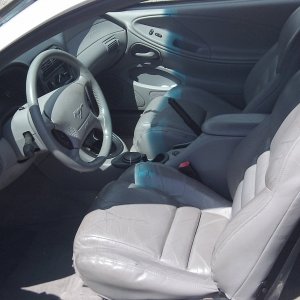
I've attached pics of the car when I first got it. The one with the other Stangs was at the gym where we just parked next to each other and it became a chain reaction. You can really see the camber there, but then I just realized the white Mustang's wheels look weird too, in an opposite way, and it's obviously the phone's camera I had at the time. Weird.

Please don't laugh at it. I'll be painting her a nice Ford Redfire type color when I'm ready (I used to be a painter, so that's not a problem).

Thanks again for the responses and sharing your knowledge!
 

Attachments

  • 20230314_144519.jpg
    20230314_144519.jpg
    246 KB · Views: 7
  • 20220829_131150.jpg
    20220829_131150.jpg
    276.2 KB · Views: 7
  • 20220829_131203.jpg
    20220829_131203.jpg
    184 KB · Views: 8
Last edited:

Warhorse Racing

Active Member
Joined
Apr 3, 2019
Messages
327
Reaction score
330
I really appreciate the kind words. I try hard to provide well-balanced, experience-based information in a manner that is easy for people to digest. There's a lot of incomplete or incorrect information out there about making 79-04 Mustangs handle better, especially when it comes to autocross. Cost is a big barrier to entry for lots of people modifying and enjoying their Mustangs. I do my best to show what's possible on a budget. I appreciate you watching my videos, and I'm glad they've been helpful.

As you update your list, I recommend thinking about which mods will require an alignment. Grouping those mods together will save some money.

Using GT front and rear sway bars will help with body roll. If you want better turn-in, consider upgraded A-arm bushings.

When I used Steeda rear control arms on my 2000 GT, I used the poly UDH bushings supplied by Steeda in the kit. You don't need a special tool to remove the OEM rubber UDH bushings from their shells. A drill, the right size bit, a wire wheel & some Scotch-Brite will get the job done.

I used Steeda rear control arms with poly UDH bushings, then J&M spherical UDH bushings on my 1992 GT. I was only able to do a few events with the spherical bushings on the car before other issues sidelined it. But the spherical bushings were a noticeable improvement over the poly UDH bushings. I did not notice more NVH from the rear of the car (but, as I mentioned before, I'm not the best judge of acceptable NVH). Spherical UDH bushings require removing the bushing shells.

I plan to use spherical UDH bushings on my SRA cars going forward.

As for squeaking, my cars have a lot of poly bushings in place. They have been lubed well. There is still definitely some squeaking on some of the cars. It sounds to me like it's mainly coming from the front (poly strut mounts), but I can't be sure. And some cars have less squeaking than others.

The right combination of springs, shocks & struts can fundamentally change the personality of these cars. They get exponentially better. It's a decision that warrants doing a lot of research.

Your updated list mentions only doing the rear lower control arms. At the very least, I would recommend doing a thorough inspection of the upper control arms. Rubber bushings can look good on the outside but be bad on the inside. Good aftermarket uppers will help address the "nervous" feeling of the rear end. That seems to be your core concern.
 
OP
OP
P

Pony02

New Member
Joined
Sep 18, 2026
Messages
8
Reaction score
0
Location
SC
Yea I meant "control arms" not just "lower". I've pretty much decided to go ahead with this second list and see how it goes. The squeaking thing is very important to me. It would ruin the whole experience for me. That's why I was putting priority into "greaseable". I've noticed in some reviews of certain control arms that "the zerk fittings don't work" or "no grease goes in". I've also noticed on some installation videos by certain companies, they recommend the heavy sticky marine grease, and they are really squeezing it into the arms.

I'm researching now how to put grooves into the bushings (dremel looks like best way) if I have to, it seems that some of these companies, maybe even the good ones, are just using flat bushings with no grooves and the grease is having a hard time getting all up inside, if it goes in at all. So far I'm not seeing any complaints that this tears up or damages the bushings. If I go with the round bushings in the middle and two outer bushings on either side (3 piece bushings) I obviously wouldn't have to groove anything. I know you highly recommend the three piece stuff, and I'm probably going to go with that.

I'm very seriously considering also just going ahead and using sphericals in the UDH mounts, too. I could just go with new OEM rubber, but as I understand it a lot of the binding concentrates there. I would think this would eliminate it. It also reduces friction that much more and it would tighten things up which is my No. 1 goal right now.
 
Last edited:
OP
OP
P

Pony02

New Member
Joined
Sep 18, 2026
Messages
8
Reaction score
0
Location
SC
You know something I forgot about. The sway bar was so thick on my 90GT (33mm). I remember looking at it and thinking, "This is what's jarring my teeth". Indeed, going over a single bump on the left or right wasn't fun, but hitting a bump that spanned across the road was downright comfortable. This confirmed my theory and I just lived with it in the back of my mind.

I'm thinking I can probably live with the B springs if I use a reasonable sway bar like the 27mm I was planning. If the lower center of gravity springs are going to be doing some of the work on this V6 car, who knows the stock bar might be fine.

I am also looking at the poly control arm bushings. I just watched a video and the amount of play in both the steering racks and A arms of these aging cars is amazing!

I'm going to examine my A arm bushings. They could have replaced components in the front end without changing those bushings. Who knows. That may have been what is affecting the camber I'm seeing on these cars, as well.

 
Last edited:

shovel

Active Member
Joined
Jan 4, 2023
Messages
708
Reaction score
655
If the lower center of gravity springs are going to be doing some of the work on this V6 car, who knows the stock bar might be fine.

When you lower macpherson strut suspension it increases the length of the roll couple and causes more force against the sway bar, not less.

But I still suggest not overwringing this or overthinking it. The car left the factory driving and handling nicely so spending a ton of time and effort and money trying to overshoot that is a pretty consistent way to end up with a ton of money in a car that sucks to drive.
 

Warhorse Racing

Active Member
Joined
Apr 3, 2019
Messages
327
Reaction score
330
Yea I meant "control arms" not just "lower". I've pretty much decided to go ahead with this second list and see how it goes. The squeaking thing is very important to me. It would ruin the whole experience for me. That's why I was putting priority into "greaseable". I've noticed in some reviews of certain control arms that "the zerk fittings don't work" or "no grease goes in". I've also noticed on some installation videos by certain companies, they recommend the heavy sticky marine grease, and they are really squeezing it into the arms.

I'm researching now how to put grooves into the bushings (dremel looks like best way) if I have to, it seems that some of these companies, maybe even the good ones, are just using flat bushings with no grooves and the grease is having a hard time getting all up inside, if it goes in at all. So far I'm not seeing any complaints that this tears up or damages the bushings. If I go with the round bushings in the middle and two outer bushings on either side (3 piece bushings) I obviously wouldn't have to groove anything. I know you highly recommend the three piece stuff, and I'm probably going to go with that.

I'm very seriously considering also just going ahead and using sphericals in the UDH mounts, too. I could just go with new OEM rubber, but as I understand it a lot of the binding concentrates there. I would think this would eliminate it. It also reduces friction that much more and it would tighten things up which is my No. 1 goal right now.
Some companies ship their control arms fully assembled, other companies ship them with the bushings and sleeves uninstalled. My BMR A-arms came assembled but not lubed, which contributed to the quick demise of the poly bushings (I assumed they were greased and didn't add enough when I finalized the assembly). It's also easy to underestimate the size of the cavity when filling bushings via the grease fitting. It should be apparent that the poly bushings are greased from the factory. If not, I recommend taking them out and making sure they are properly greased. Energy Suspension Formula 5 Prelube is one option. I've also used Green Grease.

I would be reluctant to modify the bushings with grooves. Just ensuring that they are lubed well when you install them and lubing them via the fittings once a year should be enough.

In my experience, 3-piece bushings are the difference maker when it comes to using poly bushings in the rear control arms. They offer more control and more composure. When I help people set up their autocross cars, I don't recommend rear control arms with 2-piece poly bushings, and I also don't recommend putting poly bushings in OEM rear control arms. As I mentioned in an earlier reply, bushings are the "secret sauce" for getting these cars to handle well. Based on my experience, there's a big difference in the performance between control arms with 3-piece poly bushings and 2-piece poly bushings.

The car left the factory driving and handling nicely so spending a ton of time and effort and money trying to overshoot that is a pretty consistent way to end up with a ton of money in a car that sucks to drive.

My philosophy is pretty simple: It's not about spending the most money, it's about spending the right money. My "Budget Autocross Suspension Recipe" for SRA 79-04 Mustangs includes roughly $2,600 worth of parts. That's not cheap, but it's relatively inexpensive compared to some of the handling kits on the market. That recipe is primarily about bushings, balance, and adjustability. A car using those parts will handle much better than stock.
 

shovel

Active Member
Joined
Jan 4, 2023
Messages
708
Reaction score
655
My philosophy is pretty simple: It's not about spending the most money, it's about spending the right money. My "Budget Autocross Suspension Recipe" for SRA 79-04 Mustangs includes roughly $2,600 worth of parts. That's not cheap, but it's relatively inexpensive compared to some of the handling kits on the market. That recipe is primarily about bushings, balance, and adjustability. A car using those parts will handle much better than stock.

I wouldn't dispute your expertise at autocross but what would be your street recipe for a v6 car with open diff and stock brakes whose owner has explicitly stated they don't care about being the fastest & are on an extreme budget ?

1790028446603.png
 

Warhorse Racing

Active Member
Joined
Apr 3, 2019
Messages
327
Reaction score
330
I wouldn't dispute your expertise at autocross but what would be your street recipe for a v6 car with open diff and stock brakes whose owner has explicitly stated they don't care about being the fastest & are on an extreme budget ?

View attachment 51159
The OP wants to "tighten up the cornering ability a bit over stock without compromising the NVH too much." There is also an issue with the rear of the car feeling "loose." And there are concerns about ride quality. All of those concerns factored into the mods I originally suggested:

Ford Performance B Springs with rubber isolators, a decent set of adjustable shocks & struts, new OEM-style rear control arms with rubber bushings or a good aftermarket kit with 3-piece poly bushings, and a 23mm or 24mm rear sway bar.

That recipe assumes the rubber front suspension bushings have been replaced recently. That combination will make the car handle better than stock without the ride being super-harsh. It also gives the OP some control over the ride quality. If the OP wants to go a little further to make the car handle even better (but potentially add a little more NVH), forward-offset poly A-arm bushings and spherical UDH bushings will be an improvement.

I wasn't suggesting that the OP use my "Budget Autocross Suspension Recipe." I was just commenting on the fact that it's possible to make these cars a lot better for a relatively small amount of money. I always try to tailor my advice to what people want to get out of their build.
 

96blak54

Moderator
Staff member
Staff
Joined
Feb 21, 2011
Messages
15,855
Reaction score
6,736
Location
Lawrenceburg Kentucky
is there a link to this "Budget Autocross Suspension Recipe" and why have we not made it a sticky over in the suspension threads?
 

Warhorse Racing

Active Member
Joined
Apr 3, 2019
Messages
327
Reaction score
330
is there a link to this "Budget Autocross Suspension Recipe" and why have we not made it a sticky over in the suspension threads?
I haven't posted the "Budget Autocross Suspension Recipe." It's something I share with people once they've determined their budget and chosen the SCCA class they want to run in. Because old parts get discontinued and new parts come on the market, it's something that evolves over time. I will put a post together that includes the current parts and the reasons why I chose them.
 
OP
OP
P

Pony02

New Member
Joined
Sep 18, 2026
Messages
8
Reaction score
0
Location
SC
I've been doing more researching and thinking. The car has been off the road and parked for about a year, as life happened. A couple days ago I got a battery for it, cranked it and moved it around and put it through a couple of heat cycles.

Having been away from it for a year and driving only my Expedition Eddie Bauer around, I realized just how much general road noise the car makes, even just rolling around. The suspension was clunky until it got to moving around, and then it quieted down. But it still has road and suspension noise (pretty sure it's the shot bushings). I also realized how much I overlooked on the car when I got it and was driving it.

I'm now pretty sure it doesn't have a new front suspension. I must have got that assumption from the sway bar bushings not being exactly destroyed. But those could have easily been changed out by themselves. I don't usually make such assumptions and can't remember what I was thinking at the time. So, I'm going to inspect it further later as I plan just want I'm going to have to do and spend.

Noise is going to be a bigger factor on this car than I initially considered, and I don't know how much I'm willing to spend on sound deadening and insulation. I'll be adding SOME.

As much as I'd love to tighten the car up as much as possible, as simply as possible, I'm going to have to make some compromises.

So I'm going to go with mostly OEM rubber bushings and control arms. I'll then add a Panhard bar for the rear to fix the one thing I was trying to. It isn't THAT expensive and I'm pretty confident I can install it myself, especially since I'm removing everything in the rear and the springs will be out so I can set the LCAs at level.

I realize I didn't give you guys a set budget so you maybe could help me further. I didn't really have one, just a general ball park figure of what I want to spend on the car overall. After giving some thought to the overall picture, I think can relax a bit about spending on the suspension, and as we've discussed I'm not drastically changing much on it, anyway.

So the list is now as follows:

Get
Subframe connectors

OEM Rear Upper Control Arms
OEM Rear Upper Control Arm Diff Mount Bushings (I'll use MM's bushing remover)

OEM or Aftermarket Lower Control Arms
MM panhard bar

B Springs Set w/rubber isolators
Struts/Shocks - Adjustable or Not (new rubber front strut mounts, too)

Mustang GT Front Sway Bar w/Poly Bushings

OEM A Arms
poly bushings for steering rack (or stock rubber if that doesn't work out)

I will consider other things later if they will be needed, like the caster/camber plates.
 
Last edited:

Latest posts

Forum statistics

Threads
78,753
Messages
1,540,304
Members
16,250
Latest member
Lucky57

Members online

Top