H/C/I power and mpg estimate

OldZeuski

New Member
Joined
Jul 17, 2024
Messages
78
Reaction score
24
Hey guys.

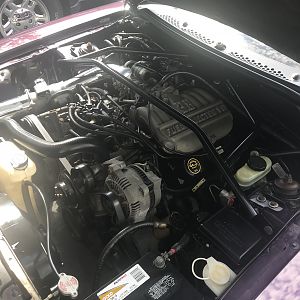
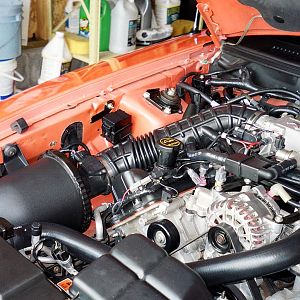
just a quick build list.

302 bored .030 over, decked .010
Stock style pistons
n41 cam 1.6 RR
Gt40 heads decked .010
Trick flow track heat upper and lower
24lb injectors
Tuned on Holley terminator X
All other supporting mods (fuel pump, CAI, TB. Etc)


I was tuning the car myself prior to rebuilding the engine. Decided to pay for a remote tune. After a few back and forth the car was running great and I felt like I got my moneys worth. Plenty of injector left, not quite 80% at the very top end.

Now that I’ve driven it for a while I’ve noticed three things. My MPG is anywhere from 11-13. Even with conservative driving mostly on the highway to work.

I make power up to roughly 5500 and it rolls over. This cam and intake combo were meant to work up to 6200. Even if the gt40’s are restrictive I’d expect it to at least keep pulling.

The car ran 15.1 @ 93 before with no tune and only the gt40 heads. Now my best was a 14.7 @ 96

I genuinely thought I’d be a good 60’ away from the 13’s. Most calculators put these times at 240-260 wheel horsepower.

This just seems low. And with my MPG I’m thinking the tune is just too rich. Maybe my tuner was trying to be safe. But I’ve seen 300 wheel dyno numbers on cars with almost identical setups.

Am I expecting too much or is there something wrong.

 

dsrtjeeper

Active Member
Joined
May 28, 2015
Messages
385
Reaction score
138
Yup. That combo is choked.
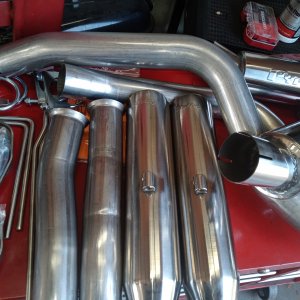
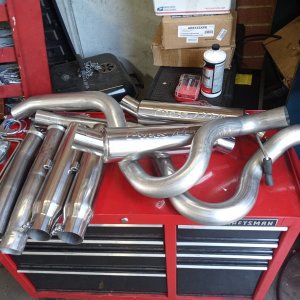
What exhaust mods?
Total ignition timing?
WOT AFR?
Cruise AFR?
 
OP
OP
OldZeuski

OldZeuski

New Member
Joined
Jul 17, 2024
Messages
78
Reaction score
24
Heads too small for cam and intake. Need larger valves and ports.

What trans and rear gear?
T5 and 3.73’s


I’m not saying the aluminum heads wouldn’t help but the gt40 is literally listed on Anderson ford as a good match with the n41.

“
Recommendations

302-347 cubic inch. This cam is to be used with 1.6 roller rockers. Best cam for GT-40 heads and intakes. 3.73 to 4.30 gears. Good drivability down to 2100 rpm. RPM range 2600-6200, works best with 89-93 EEC or carb applications. Automatic cars recommend 2800-3000 converter.”
 
Last edited:
OP
OP
OldZeuski

OldZeuski

New Member
Joined
Jul 17, 2024
Messages
78
Reaction score
24
Yup. That combo is choked.
What exhaust mods?
Total ignition timing?
WOT AFR?
Cruise AFR?
Shorty headers and Mac Pro chamber.

I’d have to check but 33 degrees I believe. Maybe 32.

I’ve been messing with the cruise AFR’s. They’re around 14.6 now but were originally 13.9 to 14.1
 

dsrtjeeper

Active Member
Joined
May 28, 2015
Messages
385
Reaction score
138
Shorty headers and Mac Pro chamber.

I’d have to check but 33 degrees I believe. Maybe 32.

I’ve been messing with the cruise AFR’s. They’re around 14.6 now but were originally 13.9 to 14.1
15.0 is safe for cruise. Many of the guys on the Holley forum run that as do I. You have to remember that your compression ratio is low also. The hot combo for a stock bottom end build is TFS 11r190 heads, Systemax intake and ED Curtis cam.
If you raised compression and installed quality aluminum heads, you'd see some nice gains. Heads with smaller combustion chambers will bump compression as will a thinner head gasket.
 

Wmac

Active Member
Joined
Mar 9, 2019
Messages
346
Reaction score
159
Location
Steeltown, Ontario
What was your 60' on the 14.7 run? What were the weather conditions and track conditions?

Agree that the times should be high 13's/low 14's. Play with timing, fuel pressure, tire pressure, remove some excess weight (front sway bar, rear seat and everything in the trunk), under drive pulleys should help significantly.
 

dsrtjeeper

Active Member
Joined
May 28, 2015
Messages
385
Reaction score
138
Terminator X has a fixed fuel pressure. If he changes his fuel pressure; he'll screw up the tune and he's back to square one.
Playing with fuel pressure and timing was an old school way to tune before chips were available. That method works great for a carburetor.
 

96blak54

Moderator
Staff member
Staff
Joined
Feb 21, 2011
Messages
15,855
Reaction score
6,736
Location
Lawrenceburg Kentucky
Gotta pay attention to the squish/quench distance for n/a engine...this is where the lost hp is at. Do you know the distance between piston ATDC and deck? Plus the headgasket crush thickness? Most MLS head gaskets crush around .040" and .045".

If the piston sits below deck at TDC any at all, the tolerances stack up. For example the piston being a larger aftermarket most likely has a reduced compression height of .010" to compensate for a .010" decked engine block. If block wasnt decked to bring in ATDC piston zero deck, the piston for sure sits below, compounding a greater squish distance.

ideally we want the piston to kiss the head at high rpm's. Tailoring the build to accommodate a .027" squish distance is fairly close and a good starting point with a build. Most track guys get to .024" and are happy, but each build is different.

Long story short, a quick explanation of squish/quench distance is when the piston darn near kisses the head and causes one final HUGE movement of the fuel air mixture, typically away from cylinder walls and towards the spark plug. This HUGE forced fuel/air movement prevents detonation and reduces advance spark timing, but the efficiency is gigantic! The tighter that air/fuel can be packaged ATDC is what we want.

Do you know what the piston deck height is ATDC? Head gasket crush thickness is?
 

dsrtjeeper

Active Member
Joined
May 28, 2015
Messages
385
Reaction score
138
@96blak54
I don't know where you got your info from but it doesn't provide good advice.
To state that "we want the piston to kiss the head at high rpm's" is just wrong. Where do the valves go while the piston is kissing the head? You must have some big eyebrows cut in those theoretical pistons along with a deep dish.

The squish distance that you recommend is unrealistic for a stock style piston and stock bottom end. It's also too tight of a quench to allow safe piston to valve clearance. Most shoot for around .040" - .050".

With a street engine, stock style pistons and low compression, the quench you suggest isn't going to happen.


https://engine-build.com/calculators/quench-deck-height
 

96blak54

Moderator
Staff member
Staff
Joined
Feb 21, 2011
Messages
15,855
Reaction score
6,736
Location
Lawrenceburg Kentucky
Many many many engine builds out there motoring around with low compression, tight quench....stock bottom ends, stock pistons... Is it unrealistic?.....no. You just got to know how to extract power. You gotta know how to build an engine.....honestly the info I posted is engine building 101.

I really dont want to unpack your response unless you legitimately want answers.

"I don't know where you got your info from" ........Engine building 101
"but it doesn't provide good advice"....................yes it does,.....the info got you thinking!
 

dsrtjeeper

Active Member
Joined
May 28, 2015
Messages
385
Reaction score
138
I'm not arguing here but I am confused by your posts.

So you want the piston to kiss the head at high rpm's? Right?

If the piston travels that far up and that close to the head; where will the valves go? I guarantee that the valves will kiss the piston. Can you guarantee that both valves will be closed at TDC?

You cannot get your claimed quench without disaster. Remember, the heads are milled .010" and the deck is milled .010".
The valves are now .020" closer to the piston. Correct?

A stock 302 piston normally sits .010" or less in the bore.

Now you have a piston top very close to being level with the deck. No?

With your quench numbers; what is the PTV clearance? Keep in mind that his cam has .222/.232 duration.

Where are the cam timing events happening? How much overlap does the cam have? Which valves will be open when the piston kisses the head?
Let's stack the tolerances...
.010" less piston deck height
.010" less cylinder head deck height
.027" crushed head gasket thickness if piston is flush with the deck. A stock 302 head gasket replacement is .047" thick. So now you've taken away roughly .020" in head gasket thickness.

.010 + .010 + .020 = .040"
That puts piston to valve clearance .040" less, roughly. Right?
Now add in cam duration and overlap.

  • TDC (exhaust / overlap): piston at top at the end of the exhaust stroke / start of intake stroke — valve overlap may exist (intake opening or exhaust still open), so valves are not all closed.

Notice the recommended piston to valve clearances in Diamond Piston's article below.

https://blog.diamondracing.net/checking-piston-to-valve-clearance-the-right-way
 
Last edited:

Snorky

Well-Known Member
Joined
Feb 10, 2022
Messages
1,539
Reaction score
1,415
After rereading this thing for the 4th timr thid morning... ADD much in thr a.m.? Don't mind the 2 gentlemen measuring and comparing their quench. They're both saying the exact same thing. One is just more German about the answer than the other.

I think SRT is right about the heads. Your cam intake and gt40 heads probably gave you 70 whp over stock which is a damn fine bump in power to be honest. The aluminum ones just out flow. Bump compression with a smaller chamber and cut back a lot of weight. I would double triple check your timing. What is your altitude and DA? That can make a massive difference in any track times. Ask any guy in denver. The only reas9n I suspect it's also something outside of your heads is that when my 2v PI mustang was stock engine 3.73 gears I think I ran 14.2, then with cams not even remotely degreed, and running a canned AM tune at the time... making an alleged 289 whp and a trailer dyno. Ran 13.7 with a terrible 60 ft at island dragway in NJ with a bad DA and 530ft above sea level.

I'm questioning some other factor like elevation and DA before finger pointing st your exact setup. Any chance you can post a time slip or provide elevation at the track since DA is probably difficult to track down.
 
Last edited:

dsrtjeeper

Active Member
Joined
May 28, 2015
Messages
385
Reaction score
138
@Snorky
If you think we're saying the exact same thing, you need to read our replies once again. Your ADD is worse than you think. Lol.

When I see statements like the piston should just kiss the head at high rpm's, I feel obligated to correct it before the OP takes that advice and loses an engine.
 

96blak54

Moderator
Staff member
Staff
Joined
Feb 21, 2011
Messages
15,855
Reaction score
6,736
Location
Lawrenceburg Kentucky
ideally we want the piston to kiss the head at high rpm's. Tailoring the build to accommodate a .027" squish distance is fairly close and a good starting point with a build. Most track guys get to .024" and are happy, but each build is different.

@dsrtjeeper hey I Bold Italistied and colored red the original info of my post. Emphasize the word "tailoring" For my response to all your "ARGUING" posts...with that said its been great to see this conversation grow. Please keep it going
 

dsrtjeeper

Active Member
Joined
May 28, 2015
Messages
385
Reaction score
138
@dsrtjeeper hey I Bold Italistied and colored red the original info of my post. Emphasize the word "tailoring" For my response to all your "ARGUING" posts...with that said its been great to see this conversation grow. Please keep it going
I'm not arguing. I'm pointing out incorrect info. You obviously can't see how having the piston kiss the head at high rpm is very bad advice. I presented the math of your proposal and showed how impractical it really is. You need to remember that the OP is already working with a completed build. It doesn't appear that he wants to rebuild and science out a new engine. There's only so much "trailering" he can do.

I'm curious to see your build plan and how you'd achieve the .027" quench with stock type pistons, N41 cam, stock block and GT40 heads. Maybe I'm missing something?
 

Snorky

Well-Known Member
Joined
Feb 10, 2022
Messages
1,539
Reaction score
1,415
@dsrtjeeper hey I Bold Italistied and colored red the original info of my post. Emphasize the word "tailoring" For my response to all your "ARGUING" posts...with that said its been great to see this conversation grow. Please keep it going
I read your comment and knew exactly what you meant on the first post and where he was going with it. Then I got dumped on.
 

Musturd

Post Whore
Joined
Feb 12, 2011
Messages
11,327
Reaction score
3,819
You are a good 60ft away from a 13.90 used to it all the time at 96-97 mph .
 

96blak54

Moderator
Staff member
Staff
Joined
Feb 21, 2011
Messages
15,855
Reaction score
6,736
Location
Lawrenceburg Kentucky
Long story short, a quick explanation of squish/quench distance is when the piston darn near kisses the head and causes one final HUGE movement of the fuel air mixture, typically away from cylinder walls and towards the spark plug. This HUGE forced fuel/air movement prevents detonation and reduces advance spark timing, but the efficiency is gigantic! The tighter that air/fuel can be packaged ATDC is what we want.

Do you know what the piston deck height is ATDC? Head gasket crush thickness is?

Ideally we want the piston to be as close to the head at higher rpm's to the point of the piston almost kissing the head. Tailoring the engine build to accommodate such attributes is engine building 101......

regardless of how well you, we, them.... can off shelf build anyones engine through theoretical unmeasured build tolerances in this chat,....its fair to say my post sparks conversation.
and thats exactly my intentions.

If its bad advice, good job calling me out. ATA BOY

Now im encouraging you @dsrtjeeper to report on every new thread from 9-21-2026 to give praise to anyone that offers good advice!
 
OP
OP
OldZeuski

OldZeuski

New Member
Joined
Jul 17, 2024
Messages
78
Reaction score
24
Sorry everyone, I stopped getting notifications for these replies and missed all of this.

I am not chasing an ET here, but I am using the trap speed as rough estimate of power for my setup. The track is @ 910 ft AMSL. I ran again last week with a 2.2 60' still 96 mph @ 14.7.

For reference, another bone stock 94 cobra ran a 14.8 @ 95 with a slower 60' (2.4). I know this is just bench racing but I am blown away that a stock gt40 car is trapping the same.

To be honest I don't think the numbers I'm seeing here are a result of improper quench. The block and heads were both decked .010" and the gasket is a .045" compressed thickness. I don't doubt that there are tricks to squeezing more power out with quench and compression. I just don't believe this setup needs all that just to make 280 wheel. And I would be perfectly happy if it did.

I am adding a fender well mounted CAI to move the filter from the engine bay. My data log showed IAT @ launch around 160* and by the top of 4th it was still 100*+ on a cool day. I do think those temps are enough to account for some power loss, but if a 230 WHP cobra is neck and neck with me I don't think this is the only issue.

I'm hopefully getting on a dyno here soon to get the actual numbers. I mostly just wanted to get a sanity check here because I am very disappointed right now.
 

Latest posts

Forum statistics

Threads
78,753
Messages
1,540,303
Members
16,250
Latest member
Lucky57

Members online

Top