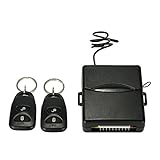
Edit: I stand corrected that is apparently a historical Steeda product -
View attachment 50917
I did NOT expect it was intended to be used in combination with the stock bar, that's awful and I hate everything about it. I had assumed it only existed for use with tubular arms on a coilover rear suspension that don't have the "flags" for the stock bar. Interesting that in the photo I was able to find it seems to have springs built into the end links, as perhaps a way to tune the bar. Did I mention I hate everything about it?
That said, there's no way that bar has anything to do with the floaty feeling you described.
These cars do generate some lift, both from the negative pressure in the wake of the rear window & top of the trunk and from air getting under the car. The stock air dam thing under the radiator support helps quite a lot with that but it gets scraped off on parking blocks and other road hazards especially with cars that have been lowered. It's cheap and easy to put a new air dam on, or a full front lip if you prefer the look.
You'll probably also want to inspect all of the bushings in your control arms, and make sure your steering alignment is in spec. A little toe out can lead to kind of a floaty feeling in the steering wheel at speed. It looks pretty likely that your rear upper bushings are vintage so they're going to need to be pressed out and replaced at minimum. There is absolutely no need to go with hockey pucks up there, fresh OEM style rubber is more than enough. These cars are not dangerously unstable stock.
I strongly doubt there's any good reason to keep both rear sway bars on the car. The weird 2nd one might be just what somebody is looking for to complete a build they've got with tubular arms, so maybe you can make a buck selling it. One thing that I'd advise you to put some more research into is proper balance on sway bars - stiffer isn't always better. They can be a band-aid for a lengthened roll couple on a car that's been lowered without roll center correction, and they can be a way to make the car feel more communicative on track or to balance front/rear weight transfer on cornering but that's not as simple as just make it stiffer. Cobras left the factory with smaller front sway bars than GT's on purpose, and as a general rule softer sway bars (with correct roll center geometry) will be more progressive and controllable at the limit than cars with too much sway bar.







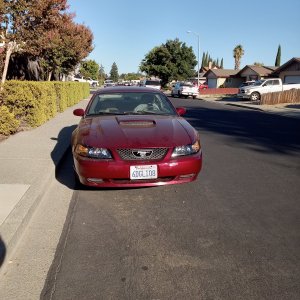
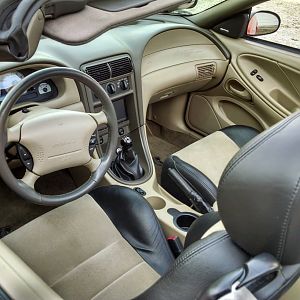
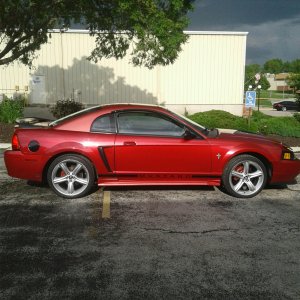
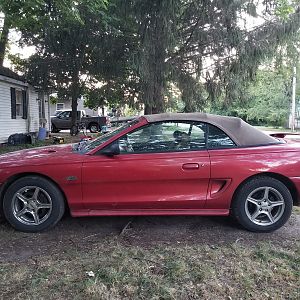
 every once in a while and enjoy the car . So i dont mind spending the money to get it upxated with newer performance parts to get it running and handling better . Like I mentioned , This was a car my father in law had built by steeda straight off the show room floor , that he left to me , and that I didnt even know he still had. He would always talk about this car in past tense LOL , Last time I saw this car was in 2006 . I thought he had sold it. But ater digging around asking family this car sat in a barn from 2006 till 2016 then moved to a field due to barn damage where it has sat ever since . I have found that since its my wife's dad old car she doesn't mind me throwing money at it