
Vibrations at 80+

cobrajeff96

Well-Known Member
Joined
Feb 1, 2022
Messages
2,815
Reaction score
2,860
Location
Germany
The engine/trans will face down slightly. And of course the opposite with the rear pinion. The less of an angle you have the better, but you don't want zero/zero. Anything between 1 to 2 degrees is fine. I have 1.7 down trans and 1.7 up pinion and it's butter smooth. Key thing is to treat the measurement process as scientific, accounting for consistency and repeatability in your 'tests'. Otherwise, you're fooling yourself.

Also a key thing to remember is that if a car sits for more than just a few months, the weight of the car will shove out all the wheel bearing grease and maybe other things too like balljoints. As pretty much everything on a car is connected and load bearing, it wouldn't be crazy to think that for 8 years sitting still the whole entire suspension needs a re-work.

If you don't feel any vibes in either the seat, the steering wheel, or both, then maybe this can be overlooked. But certainly the rear axle bearings (I assume this is an SRA) and possibly the diff bearings ought to be inspected as well. Pinion bearing for that matter too, checking for runout I would assume. Usually with worn or out of spec rear gears you will definitely notice some awful sounds. Do the obvious and easy checks too like checking trans fluid level. I mean.....8 years. Damn. It wouldn't be crazy to think that all fluids should be flushed if not already.
 
OP
OP
OldZeuski

OldZeuski

New Member
Joined
Jul 17, 2024
Messages
56
Reaction score
17
The engine/trans will face down slightly. And of course the opposite with the rear pinion. The less of an angle you have the better, but you don't want zero/zero. Anything between 1 to 2 degrees is fine. I have 1.7 down trans and 1.7 up pinion and it's butter smooth. Key thing is to treat the measurement process as scientific, accounting for consistency and repeatability in your 'tests'. Otherwise, you're fooling yourself.

Also a key thing to remember is that if a car sits for more than just a few months, the weight of the car will shove out all the wheel bearing grease and maybe other things too like balljoints. As pretty much everything on a car is connected and load bearing, it wouldn't be crazy to think that for 8 years sitting still the whole entire suspension needs a re-work.

If you don't feel any vibes in either the seat, the steering wheel, or both, then maybe this can be overlooked. But certainly the rear axle bearings (I assume this is an SRA) and possibly the diff bearings ought to be inspected as well. Pinion bearing for that matter too, checking for runout I would assume. Usually with worn or out of spec rear gears you will definitely notice some awful sounds. Do the obvious and easy checks too like checking trans fluid level. I mean.....8 years. Damn. It wouldn't be crazy to think that all fluids should be flushed if not already.
I appreciate the input. I guess I need to mention everything that's been done on this thread. I've been asking a lot of questions and mentioning bits and pieces on multiple threads.

Specific to what you've mentioned. I've replaced the entire rear suspension: control arms, springs, shocks, axles, bearings and all differential bearings. I've also replaced the driveshaft with an aluminum one and new U joints (balanced at a shop). And I have new wheels and tires balanced as well. The trans was rebuilt a few weeks ago with everything but the gears and shafts. My pinion angle is now within 1* of the trans after I installed and adjusted new lower control arms. But still, the vibration exists and gets terrible around 100 mph. Before my adjustable LCA's I was at 3.5* difference between the trans and pinion. I thought surely that was my problem but it did not improve anything.

I don't feel anything in the steering wheel and only marginally in the seat. But this vibration is intense the higher I go above 80.

I have an arduino and an accelerometer that I'm going to try and rig up to either shifter or the axle housing and see if I can data log the exact frequency of the vibration. I know there are frequencies that correlate with different pieces of the drive train. I'm still convinced this is an alignment/angle issue because literally everything is new and tight.
 
OP
OP
OldZeuski

OldZeuski

New Member
Joined
Jul 17, 2024
Messages
56
Reaction score
17
Also, It seems like the trans is angle UP and not down. To be honest I can't quite visualize how the trans would be angled down relative to horizontal, and the pinion UP, if the pinion is physically lower than the trans. I've never seen a diagram where this is true. Mine is more along the lines of "Right".

driveshaft-does-not-need-to-be-perfectly-aligned-with-the-transmission-output-and-the-final-dr...jpg
 

cobrajeff96

Well-Known Member
Joined
Feb 1, 2022
Messages
2,815
Reaction score
2,860
Location
Germany
Hard to imagine any SN95 Mustang's engine slanting upward toward the rear of the car. I've never seen or heard anything like that.

Bear in mind that the closer you get them to equal & opposite angles the less chance the driveshaft has of inducing vibration into the drivetrain. Within one degree might sound good, but it's best for the two u-joint angles to cancel eachother out.

And I didn't think you could adjust pinion angle by the LCAs, only the UCAs.
 
OP
OP
OldZeuski

OldZeuski

New Member
Joined
Jul 17, 2024
Messages
56
Reaction score
17
Hard to imagine any SN95 Mustang's engine slanting upward toward the rear of the car. I've never seen or heard anything like that.

Bear in mind that the closer you get them to equal & opposite angles the less chance the driveshaft has of inducing vibration into the drivetrain. Within one degree might sound good, but it's best for the two u-joint angles to cancel eachother out.

And I didn't think you could adjust pinion angle by the LCAs, only the UCAs.
So your driveshaft at the pinion is opposite to what is shown in the photo i posted? My pinion and drive shaft make the angle pictured, same as my trans.

I have been able to adjust with the lower control arms just fine. It only took a few turns of the nut to get it to move 2-3*. It would have worked just fine with uppers as well but I kept the uppers stock to allow for some flex and avoid binding the rear suspension.
 
OP
OP
OldZeuski

OldZeuski

New Member
Joined
Jul 17, 2024
Messages
56
Reaction score
17
I've been adjusting the trans, driveshaft, and pinion angles only in relation to each other. I haven't actually measured my trans angle in relation to the frame of the car, It just visually appears to be angled up. I will actually measure it next time I'm down there.
 

cobrajeff96

Well-Known Member
Joined
Feb 1, 2022
Messages
2,815
Reaction score
2,860
Location
Germany
Are you taking measurements with the suspension fully loaded? It's the only way to do it on an SRA car.

Keep in mind that when you alter the LCA lengths, you are changing suspension geometries such as instant center. And you might be affecting wheel-to-fender clearance fore-to-aft. Maybe it works fine, I don't really know as I run IRS myself so it's been a while.

In a bellhousing car, it's common for the front end drivetrain to be angled down towards the rear of the car for the obvious reason that it has to generously clear the tunnel. I have never seen a Mustang that showed the opposite, and the pinion has always been angled upward to compensate the driveline angle chiefly for that very reason.
 
OP
OP
OldZeuski

OldZeuski

New Member
Joined
Jul 17, 2024
Messages
56
Reaction score
17
Update

Had the wheels road force balanced. One is at 79 lbs road force variation, another is at 30. They could not get them any better. Wheels all balanced perfectly at the tire shop, so this problem was only detectable on a road force balancer. The other two wheels were better and were brought down to <5 lbs
 
Last edited:
OP
OP
OldZeuski

OldZeuski

New Member
Joined
Jul 17, 2024
Messages
56
Reaction score
17
Just an update. Engine was out for a total rebuild. Tires and wheels were dynamically balanced with a road force balancer.

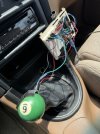
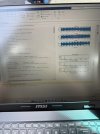
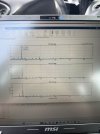
I ended up putting my arduino with an accelerometer on the stick to measure vibrations. After doing FFT the frequency at 90mph is dead nuts in tune with the drive shaft rpm (70hz).

This shaft is aluminum and balanced TWICE now, with new u joints. Idk what the hell is left.
 

Attachments

  • IMG_2188.jpeg
    IMG_2188.jpeg
    76.8 KB · Views: 7
  • IMG_2190.jpeg
    IMG_2190.jpeg
    67 KB · Views: 7
  • IMG_2191.jpeg
    IMG_2191.jpeg
    58.2 KB · Views: 7

dsrtjeeper

New Member
Joined
May 28, 2015
Messages
75
Reaction score
5
I'm dealing with the same thing and around the same speed. I've done everything that you have including having the transmission gone through. I even spaced my QA1 k-member down 1/2" to decrease the crankshaft angle.
The only thing left is trying a high quality driveshaft that's designed for high speeds. Driveshafts from folks like Mark Williams, The Driveshaft Shop and Strange, etc...that are truly high speed balanced can make a big difference.
Inferior shafts can start to whip at their critical speed.
 

ttocs

Forum's #1 poster
Joined
Oct 9, 2009
Messages
37,701
Reaction score
7,808
Location
Evansville Indiana
I know you replaced the shaft and said it helped a little, it is easy to assume that it should be perfect out of the box but ya never know between manf or shipping what you could have got. I don't think it costs that much to get one balanced to be sure and they are not that hard to take off/put on. At the very least try turning it 90 degrees and see if that helps/changes things.
 
OP
OP
OldZeuski

OldZeuski

New Member
Joined
Jul 17, 2024
Messages
56
Reaction score
17
i used to get this car up to 140 and it was smooth as glass, with the stock drive shaft. I sold the car and bought it back and the only changed part was an aluminum DS. I balanced that one, then bought a whole new one, then balanced that one twice. Each time they said it was never out of balance.

I’m going to check runout on the pinion and tailshaft. Then I might just drive it off a cliff.
 

GTamas

Moderator
Staff
SN95 Supporter
Joined
Apr 17, 2023
Messages
645
Reaction score
740
Location
Austria
Just an update. Engine was out for a total rebuild. Tires and wheels were dynamically balanced with a road force balancer.

I ended up putting my arduino with an accelerometer on the stick to measure vibrations. After doing FFT the frequency at 90mph is dead nuts in tune with the drive shaft rpm (70hz).

This shaft is aluminum and balanced TWICE now, with new u joints. Idk what the hell is left.
I am amazed at this solution with the arduino and checking the frequency, wow. Always learning something new, that's why I love reading this forum.
 

dsrtjeeper

New Member
Joined
May 28, 2015
Messages
75
Reaction score
5
i used to get this car up to 140 and it was smooth as glass, with the stock drive shaft. I sold the car and bought it back and the only changed part was an aluminum DS. I balanced that one, then bought a whole new one, then balanced that one twice. Each time they said it was never out of balance.

I’m going to check runout on the pinion and tailshaft. Then I might just drive it off a cliff.
This sounds all too familiar. The nice thing about the factory steel driveshaft is that it doesn't whip at high speeds like an aluminum shaft. Many race cars still use materials like chromoly for that reason.
 
OP
OP
OldZeuski

OldZeuski

New Member
Joined
Jul 17, 2024
Messages
56
Reaction score
17
This sounds all too familiar. The nice thing about the factory steel driveshaft is that it doesn't whip at high speeds like an aluminum shaft. Many race cars still use materials like chromoly for that reason.
I'm not impressed. I'm not sure why the guy I sold it to swapped them, but I'm wishing he hadn't.
 
OP
OP
OldZeuski

OldZeuski

New Member
Joined
Jul 17, 2024
Messages
56
Reaction score
17
I am amazed at this solution with the arduino and checking the frequency, wow. Always learning something new, that's why I love reading this forum.
I'm an engineer and I do vibration analysis all the time. This little Arduino was from a kit I used in college, and the code for MATLAB can easily be written by AI now, although you need a license.

For the price of a professional vibration analyzer this setup does just as good for anything under 700 hz and at a fraction of the price. If anyone is interested in making one I can share the parts list, and the code can be made in python instead of MATLAB which doesn't require a license. Super useful IMO.
 
Top