I just swapped an 03 engine in which is basically the same thing. Couple of things I had to swap:
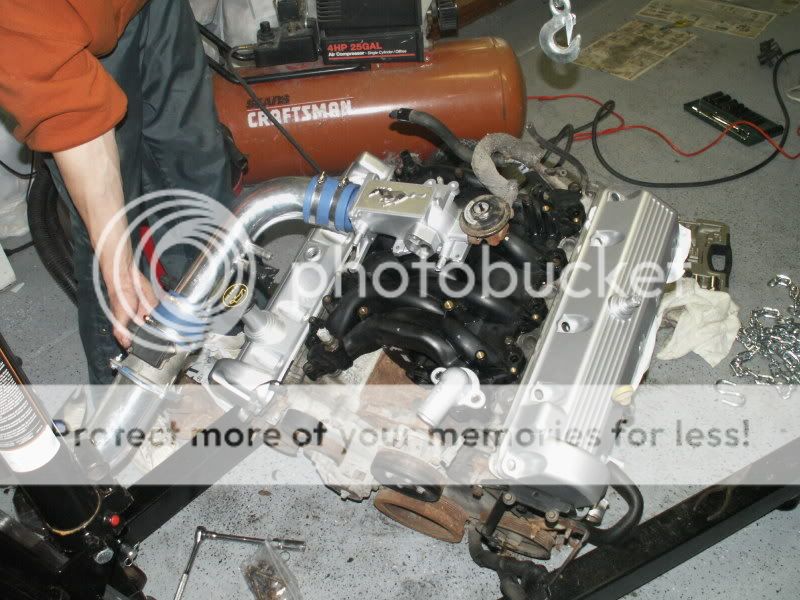
I went ahead and swapped the old crossover to the new intake. That was for simplicities sake instead of having to extend wires and do either a y connector or put the other coolant sensor elsewhere. I'm more comfortable knowing it's right there anyway. It doesn't take a long time to pull an intake when the engines are out and the gaskets are reusable. I reused the water neck above the thermostat from the old motor because the new one did interfere with the coil pack. On the passenger's side, I had to put a spacer for the coil pack bracket so it'd clear the idler pulley. No biggie. Since your car had the aluminum crossover, you can simply reuse your alternator bracket from the old motor.
I used the timing cover from the 03, which has a different tensioner and uses a different belt routing, thus a shorter belt. Simply order a serpentine belt for that year engine, you'll have no issues using your A/C and power steering pump.
The driver's side exhaust manifold on my 98 had a larger donut on it than the 2003 engine did, causing an exhaust leak on the left side because the Bassani X-pipe I had was designed for the larger donut on the early engine. You should take a look, if they're different and you're using a pipe for a 96-98 car make sure to swap either the manifold or crossover pipe. I got hasty and put the engine in as quick as I could before I realized the difference, and I just had a friend at an exhaust shop mandrel bend me a new leg for the pipe with a smaller flange and used the PI manifold since I'd already put the engine in the car and it was easier than me pulling the motor again. But it's quicker to swap the manifold while the engines are out and there isn't any real flow difference between the two that I could tell based on the design. If you're worried about that swap both manifolds for peace of mind.
The camshaft position sensor (driver's side, under the valve cover behind the power steering reservoir bracket) and the crankshaft position sensor (very bottom of the engine on the passengers side, in the front) used slightly different pins in the plug, the newer engines had a needle style pin where the older engine used sensors with a wider pin. The harness itself will plug into both, but I don't know if it'd cause problems but I went ahead and changed them out because it was easy to do with the engine out of the car and I'd rather have that security. Those were the only electrical connections that I found that were different between the two engines. Also, my PI engine used a different style plug for the oil pressure sensor compared to the NPI engine, I changed that as well.
Fuel rails are a given. if a mechanic or friend has the tools to remove the rails from the lines that'll make things easier. If not you can simply take off the fuel rails at the intake, fold them over to the windshield or similar and install them once you get the engine in the car. Vasoline REALLY helps pressing the fuel rails on top of the injectors much easier. Don't use anything other than vasoline though.
Once I fired up the car, it idled really low (around 500rpm) and after it warmed up and I drove it and came back it wouldn't idle. I had to put the old Idle Air control valve assembly off my 98 engine onto the new engine's plenum, the two are slightly different and the older one is calibrated to your PCM. After I changed that it idled perfectly.
The PCV valve was different on the two, the newer engine had a PCV valve with a sensor (communicates with computer to throw a code if it fails, basically), but is functionally no different. I left that as it was since the PCV hose size between the two is different as is the plenum, also the valve cover has a smaller opening for that PCV valve where the older engine had a grommet and a typical PCV.
That's pretty much every little quirk I can think of from my swap, if I missed any I'll let ya know but that covers everything from memory. Driveability was good after I fired it up and I had no issues other than the leak (preventable) and the IAC valve (preventable).