You are using an out of date browser. It may not display this or other websites correctly.
You should upgrade or use an alternative browser.
You should upgrade or use an alternative browser.
Chasing an Electrical Gremlin...
- Thread starter MadStang
- Start date

OP
OP

MadStang
Well-Known Member
okay.. pics are uploading. New update though. I just put my head next to my battery. It's probably not normal to hear a light crackling huh?
OP
OP
MadStang
Well-Known Member


g36 monkey
Post Whore
make sure its the battery and not a relay. when relays are bad/melted, they usually make funny noises. if its your battery, change it. unless its on the charger, because then it might make noise.
OP
OP
MadStang
Well-Known Member
make sure its the battery and not a relay. when relays are bad/melted, they usually make funny noises. if its your battery, change it. unless its on the charger, because then it might make noise.
The battery is also within a couple of months new lol. Where is the relay? Because I'm right over the battery and it sounds like someone is trying to boil water.
I took it off the charger about 30-45min ago, it was full on a 2-amp recharge.
OP
OP
MadStang
Well-Known Member
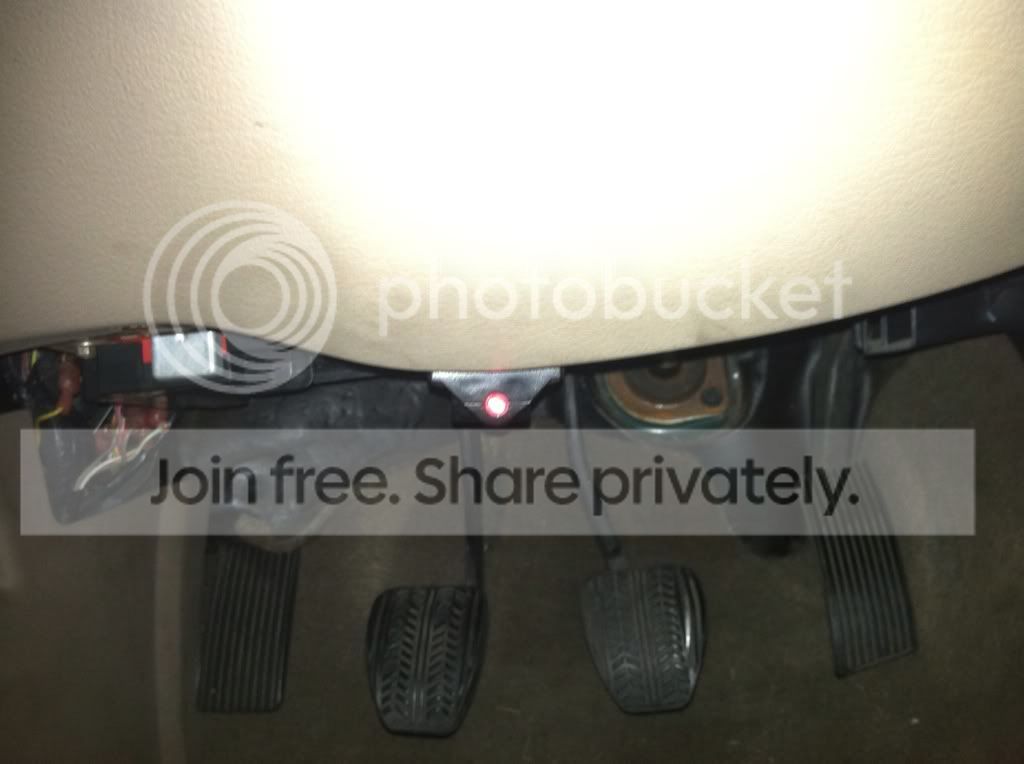
oh and i chased the wiring behind the kick panel for that weird switch thing, it goes into the fender. I couldn't trace it from there because it was wrapped into a harness.
OP
OP
MadStang
Well-Known Member


Here's the bullshit diagrams for the wiring, I have access to Chiltons for free, but, I have no clue wtf I'm looking at.

ttocs
Forum's #1 poster
that is an aftermarket alarm. Alot of connections for it are normally made in the drivers kick panel, takes 2 mins to pull it but I bet there is an alarm module back there.
OP
OP
MadStang
Well-Known Member
that is an aftermarket alarm. Alot of connections for it are normally made in the drivers kick panel, takes 2 mins to pull it but I bet there is an alarm module back there.
It's weird though, there's no alarm stuff that came with the car unless it was lost. gonna see what I can do to take it out.
g36 monkey
Post Whore
There's a relay box under the hood, I couldn't tell you which one might be making noise lol.
And yes, as scott said thats an aftermarket alarm.
Glad he piped in, dude knows his stuff.
And yes, as scott said thats an aftermarket alarm.
Glad he piped in, dude knows his stuff.
OP
OP
MadStang
Well-Known Member
There's a relay box under the hood, I couldn't tell you which one might be making noise lol.
And yes, as scott said thats an aftermarket alarm.
Glad he piped in, dude knows his stuff.
it was the battery for sure but only because i charged it. Still at a loss for what is causing my cars death lol
ttocs
Forum's #1 poster
dealerships and auctions will often just toss the remotes to the system and leave the actual alarm in the car because on some if they do not do it right the car will not start. You have an alarm in there somewhere, follow those wires to see where/what it is. You might be able to buy a remote and program it and viola, you got an alarm!
I can see a number of connectors in the kick-panel area in the first pic as well as a couple of extra wire bundles. Like I said pull the door sill and then the kick panel and take a pic benind it.
I can see a number of connectors in the kick-panel area in the first pic as well as a couple of extra wire bundles. Like I said pull the door sill and then the kick panel and take a pic benind it.
OP
OP
MadStang
Well-Known Member
dealerships and auctions will often just toss the remotes to the system and leave the actual alarm in the car because on some if they do not do it right the car will not start. You have an alarm in there somewhere, follow those wires to see where/what it is. You might be able to buy a remote and program it and viola, you got an alarm!
I can see a number of connectors in the kick-panel area in the first pic as well as a couple of extra wire bundles. Like I said pull the door sill and then the kick panel and take a pic benind it.
if anything I want it pulled outta there, I don't need another alarm lol.

framda
Active Member
I was reading your post and all of the advice that you are getting is good. I just wanted to add something that has helped me out in the past. When I was in shop class back in high school I was real good at wrenching but electrical issues always intimidated me. My shop teacher explained it like this,
Electricity and water act the same in many ways. They always try to find ground. Water runs down hill and electricity always looks for the ground.
Electrical wires are basically the same as pipes for water, the more electricity that you are flowing, the bigger the cable you need to do it without problems.
Water volume is similar to voltage, water pressure is similar to amperage.
They both take the path of least resistance. If water can take a diversion that is easier it will. If a cable has a bare wire the electricity will go that route instead of going towards (and powering) a light or motor for instance. I think of this as a garden hose that has a hole, the water will run out of the hole instead of powering an oscillating sprinkler for example. A short to ground is like a water leak.
Switches are the same as valves, they both allow something to pass or block its travel. They both can get stuck open or closed also.
Fuses are similar to a switch in the way they operate but they only do it one time. Once a fuse burns and stops the flow, it is garbage and needs to be replaced. Relays can reset, (automatically or manually)
Batteries are storage tanks, some are large and some are smaller.
Alternators are like water pumps in the sense that they produce output, but they must have a supply to start with.
When you are trying to troubleshoot electrical you always start at the beginning of the flowchart to eliminate the problem. these flowcharts are made by smart people and there is a reason to check each thing in its order. Skipping a step that seems redundant can cost a lot of time and money.
Electrical schematics are intimidating when you first look at them. I look at them the same way that I would look at a plan for an in ground sprinkler system. The electricity will start at one part and continue to its destination unless something is wrong. This is why it is important to follow the flowchart.
Water and electricity always follow the rules. You may encounter a new issue but the way that the electricity reacts to it will always be the same unless something changes.
Some of these explanations are simplified and I don't want to insult anyone's intelligence. I still use this method of thinking after many years of Ford and Chrysler driveability factory training. Each time I need to diagnose something I always start at the beginning and I don't assume anything. Always verify something instead of writing it off as unimportant.
Electricity and water act the same in many ways. They always try to find ground. Water runs down hill and electricity always looks for the ground.
Electrical wires are basically the same as pipes for water, the more electricity that you are flowing, the bigger the cable you need to do it without problems.
Water volume is similar to voltage, water pressure is similar to amperage.
They both take the path of least resistance. If water can take a diversion that is easier it will. If a cable has a bare wire the electricity will go that route instead of going towards (and powering) a light or motor for instance. I think of this as a garden hose that has a hole, the water will run out of the hole instead of powering an oscillating sprinkler for example. A short to ground is like a water leak.
Switches are the same as valves, they both allow something to pass or block its travel. They both can get stuck open or closed also.
Fuses are similar to a switch in the way they operate but they only do it one time. Once a fuse burns and stops the flow, it is garbage and needs to be replaced. Relays can reset, (automatically or manually)
Batteries are storage tanks, some are large and some are smaller.
Alternators are like water pumps in the sense that they produce output, but they must have a supply to start with.
When you are trying to troubleshoot electrical you always start at the beginning of the flowchart to eliminate the problem. these flowcharts are made by smart people and there is a reason to check each thing in its order. Skipping a step that seems redundant can cost a lot of time and money.
Electrical schematics are intimidating when you first look at them. I look at them the same way that I would look at a plan for an in ground sprinkler system. The electricity will start at one part and continue to its destination unless something is wrong. This is why it is important to follow the flowchart.
Water and electricity always follow the rules. You may encounter a new issue but the way that the electricity reacts to it will always be the same unless something changes.
Some of these explanations are simplified and I don't want to insult anyone's intelligence. I still use this method of thinking after many years of Ford and Chrysler driveability factory training. Each time I need to diagnose something I always start at the beginning and I don't assume anything. Always verify something instead of writing it off as unimportant.
OP
OP
MadStang
Well-Known Member
I was reading your post and all of the advice that you are getting is good. I just wanted to add something that has helped me out in the past. When I was in shop class back in high school I was real good at wrenching but electrical issues always intimidated me. My shop teacher explained it like this,
Electricity and water act the same in many ways. They always try to find ground. Water runs down hill and electricity always looks for the ground.
Electrical wires are basically the same as pipes for water, the more electricity that you are flowing, the bigger the cable you need to do it without problems.
Water volume is similar to voltage, water pressure is similar to amperage.
They both take the path of least resistance. If water can take a diversion that is easier it will. If a cable has a bare wire the electricity will go that route instead of going towards (and powering) a light or motor for instance. I think of this as a garden hose that has a hole, the water will run out of the hole instead of powering an oscillating sprinkler for example. A short to ground is like a water leak.
Switches are the same as valves, they both allow something to pass or block its travel. They both can get stuck open or closed also.
Fuses are similar to a switch in the way they operate but they only do it one time. Once a fuse burns and stops the flow, it is garbage and needs to be replaced. Relays can reset, (automatically or manually)
Batteries are storage tanks, some are large and some are smaller.
Alternators are like water pumps in the sense that they produce output, but they must have a supply to start with.
When you are trying to troubleshoot electrical you always start at the beginning of the flowchart to eliminate the problem. these flowcharts are made by smart people and there is a reason to check each thing in its order. Skipping a step that seems redundant can cost a lot of time and money.
Electrical schematics are intimidating when you first look at them. I look at them the same way that I would look at a plan for an in ground sprinkler system. The electricity will start at one part and continue to its destination unless something is wrong. This is why it is important to follow the flowchart.
Water and electricity always follow the rules. You may encounter a new issue but the way that the electricity reacts to it will always be the same unless something changes.
Some of these explanations are simplified and I don't want to insult anyone's intelligence. I still use this method of thinking after many years of Ford and Chrysler driveability factory training. Each time I need to diagnose something I always start at the beginning and I don't assume anything. Always verify something instead of writing it off as unimportant.
Thanks man =]
As for the little switch under the dash, I tried putting the switch over to the other option, basically all that box does it whenever I press a button on the OEM remote is it honks the horn once for unlock and twice for lock.
ttocs
Forum's #1 poster
that light and switch should have nothing to do with the stock alarm remote.
OP
OP
MadStang
Well-Known Member
that light and switch should have nothing to do with the stock alarm remote.
it's tied directly into the stock alarm. when I changed the switch position now every button I press on the OEM is audible by the horn.
framda
Active Member
Do you have a voltmeter?
OP
OP
MadStang
Well-Known Member
Do you have a voltmeter?
I have an ohmmeter, dunno if I still have a voltmeter though lol
framda
Active Member
First step would be to set it to read DC volts. Start up the car and turn on the A/C and headlights (put them on highbeams.) Touch the Voltmeter leads to the Battery and see how much voltage you have at the battery while it is running with the accys on. You should have at least 13-13.5 volts. That will tell you what the ALT is putting out, and only takes 60 seconds to perform. You can also unhook the batt and check the voltage. leave it unhooked and check it later (at least a couple of hrs, the longer the better).
If the voltage has dropped sufficiently while unhooked, batt is not holding a charge. You can do this test hooked up to the car after you verify the batt is ok. You dont need an expensive volt tester, but I would suggest a digital from sears. Let us know what you find.
If the voltage has dropped sufficiently while unhooked, batt is not holding a charge. You can do this test hooked up to the car after you verify the batt is ok. You dont need an expensive volt tester, but I would suggest a digital from sears. Let us know what you find.
Similar threads

- Replies
- 22
- Views
- 6K


- Replies
- 10
- Views
- 2K